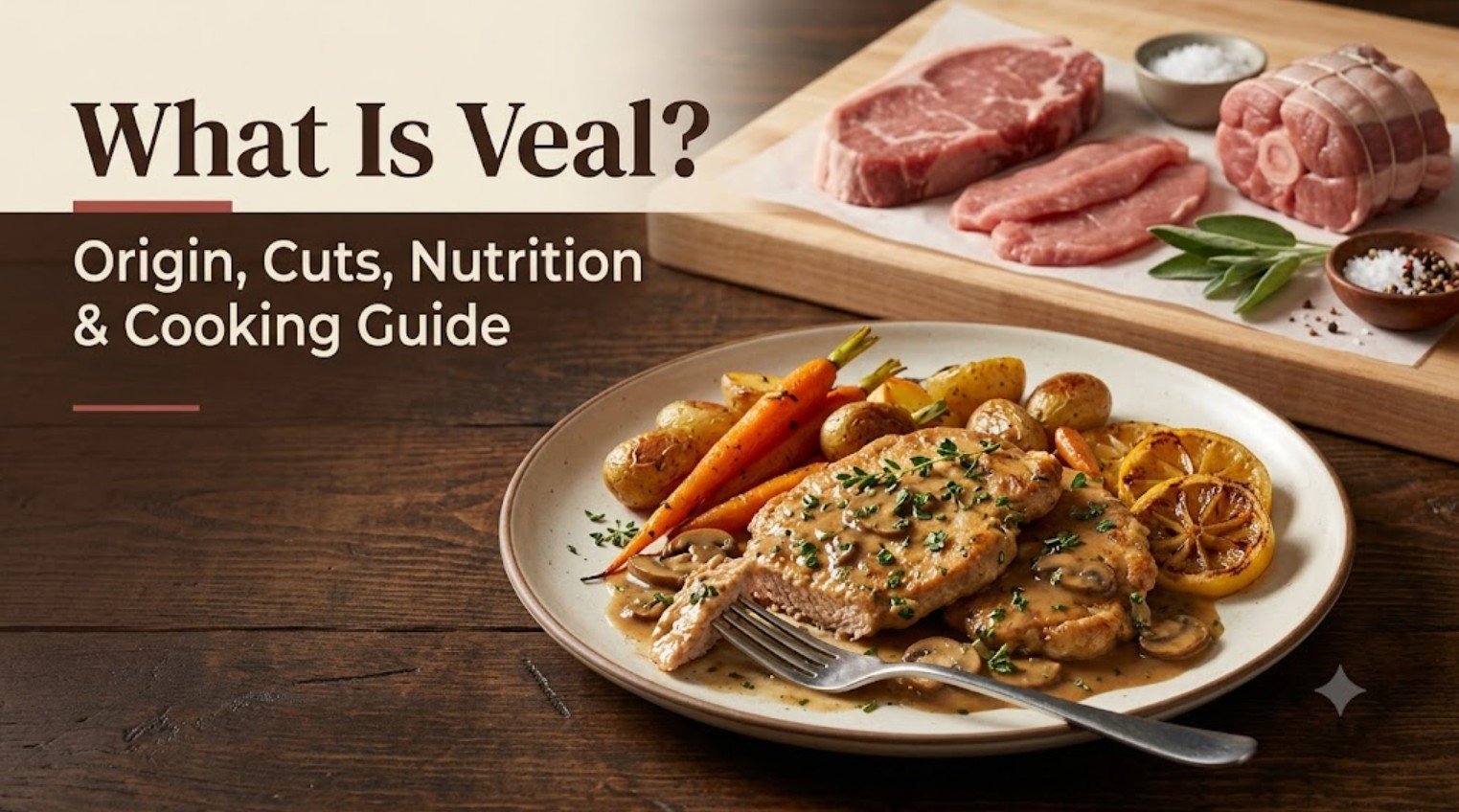
Veal appears in dishes such as schnitzel, osso buco, scallopini, and breaded cutlets, yet many diners are unsure what it actually is. In simple terms, veal is meat from young cattle, usually calves. It comes from the same species as beef, but the animal’s younger age usually gives the meat a finer texture, lighter colour, and milder flavour.
Understanding what is veal also involves knowing how the calf was raised, what it ate, and which cut is being sold. These factors influence tenderness, colour, flavour, and nutritional value. This guide explains how veal differs from beef, the main cuts available, its health considerations, and the safest ways to prepare it.
What Is Veal and Where Does It Come From?
Veal comes from young cattle and is often connected with the dairy industry. Male dairy calves cannot produce milk, so some are raised for veal or beef. However, veal may come from male or female calves and from either dairy or beef breeds.
Some calves receive mainly milk or specially formulated feed, while others also eat grain, grass, or forage. More solid feed often produces darker, pinker meat, while milk-fed veal is usually paler. Its delicate flavour suits ingredients such as lemon, herbs, mushrooms, and light sauces.
The exact age and classification of veal can vary between countries. Some regions divide meat from young cattle into separate categories based on the animal’s age and feeding system. This is why one veal product may look noticeably different from another without either being poor quality.
How Is Veal Different From Beef?
The main difference between veal and beef is the age of the animal. Veal comes from young cattle, while beef generally comes from older cattle. Age affects muscle development and myoglobin, the protein responsible for much of meat’s red colour. Veal is therefore commonly pale pink or light red, while beef is usually darker and stronger in flavour.
Veal also behaves differently during cooking. Many cuts are fine-grained and naturally tender, but lean pieces can dry out when overcooked. Beef may contain more marbling, depending on the cut and grade, giving it a richer taste and juicier texture.
| Feature | Veal | Beef |
|---|---|---|
| Source | Young cattle | Older cattle |
| Colour | Pale pink to light red | Usually deeper red |
| Flavour | Mild and delicate | Richer and stronger |
| Texture | Fine-grained and often tender | Varies considerably by cut |
| Common uses | Cutlets, chops, braises | Steaks, roasts, burgers |
Despite its lighter appearance, veal is classified as red meat. It should therefore be considered alongside other red meats when planning portion sizes and maintaining a balanced diet.
Common Types and Cuts of Veal
Veal may be described according to how the calf was fed. Milk-fed or formula-fed veal is generally pale and mild. Grain-fed or pasture-raised veal is usually pinker and may have a fuller taste. “Rose veal” commonly refers to darker pink meat from calves that received more solid feed, although regional labelling rules differ.
The cut determines the best cooking method. Veal cutlets are thin slices, often taken from the leg, and cook quickly. Chops usually come from the loin or rib and can be grilled, pan-seared, or roasted. Shoulder and breast are better suited to slow cooking.
Veal shank is used for osso buco because the bone, marrow, and connective tissue create a rich result after braising. Ground veal works well in meatballs, meatloaf, burgers, and savoury fillings. Veal bones are also commonly used for stock because they release gelatine and add body to sauces.
Tender cuts should generally be cooked quickly, while tougher cuts need time to soften. Cooking a thin cutlet for too long can make it dry, whereas rushing a shank or shoulder may leave the meat tough.
Veal Nutrition and Health Considerations
Veal provides complete protein and nutrients including vitamin B12, zinc, iron, selenium, phosphorus, and several B vitamins. Its exact nutritional value depends on the cut, visible fat, portion size, and cooking method. A lean grilled chop is nutritionally different from a breaded cutlet fried in oil or served with a creamy sauce.
It can be part of a balanced diet when eaten in sensible portions with vegetables, whole grains, and varied protein sources. Because veal is red meat, moderation is appropriate. Lean cuts and lighter cooking methods can help control saturated-fat and calorie intake.
Food safety matters as well. Whole steaks, chops, and roasts should reach a safe internal temperature, while ground veal needs a higher temperature because bacteria may be distributed throughout the meat. The USDA’s official veal food-safety guidance explains recommended storage, thawing, and cooking practices.
Animal welfare is another consideration. Veal production has faced criticism because some older systems restricted calves’ movement or social contact. Buyers concerned about welfare should look for clear information about group housing, bedding, diet, outdoor access, transport, and independent certification rather than relying on vague marketing claims.
How to Buy, Store, and Cook Veal Safely
Fresh veal should have intact packaging, a clean smell, and a moist but not slimy surface. Its colour may range from pale pink to light red, so darker meat does not automatically mean lower quality. Check the use-by date, country of origin, farming information, and refrigeration conditions before buying.
Keep raw veal cold and separate from cooked or ready-to-eat foods. Whole cuts can usually remain refrigerated for a few days, while ground veal should be used sooner. Thaw frozen veal in the refrigerator, in cold water, or in the microwave rather than leaving it on the kitchen counter.
Use a food thermometer instead of judging safety by colour. Whole veal cuts should reach an internal temperature of 63°C or 145°F and rest for three minutes. Ground veal should reach 71°C or 160°F. Cutlets need brief cooking, while shanks and shoulder require slow, moist heat.
Veal’s mild flavour benefits from balanced seasoning. Lemon, capers, parsley, thyme, garlic, mushrooms, and tomato are reliable choices. Avoid overcrowding the pan because this creates steam instead of browning. Let chops rest briefly before serving so the juices can settle within the meat.
Conclusion
Veal is meat from young cattle, known for its mild flavour, fine texture, and versatility. It differs from beef mainly because of the animal’s age, although diet, farming method, and cut also influence the final product. Tender cutlets and chops suit quick cooking, while shanks and shoulder perform best in slow braises.
Choose fresh, clearly labelled meat, consider available welfare information, and store it carefully. When cooked with the correct technique and served in moderate portions, veal can provide protein, iron, zinc, and vitamin B12 as part of a varied diet.
Frequently Asked Questions
Is veal the same as beef?
Veal and beef come from the same animal species, but veal comes from younger cattle. Beef usually comes from older animals.
Why is veal lighter than beef?
Young cattle generally have less myoglobin in their muscles, which gives veal its characteristic pale-pink or light-red colour.
Is veal considered red meat?
Yes. Veal is classified as red meat even when it looks considerably paler than mature beef.
What is the best way to cook veal?
Cook tender cuts such as cutlets and chops quickly. Tougher cuts such as shank and shoulder are best cooked slowly with moisture.